
Why Are Patients So Afraid of Root Canals?
Few dental procedures are surrounded by as many myths as root canals. For decades, patients have associated root canal treatment with extreme pain, long appointments, and discomfort.
The truth?
Root canals don’t cause pain — the infection does.
In fact, one of the biggest root canal treatment benefits is immediate pain relief once the infection is removed.
Unfortunately, outdated stories and misinformation cause many patients to delay treatment—allowing infections to worsen and increasing the risk of tooth loss.
What Actually Causes Tooth Pain? (It’s Not the Root Canal)
To understand why a root canal helps, you need to understand what’s really happening inside your tooth.
Tooth pain is usually caused by:
- Deep decay reaching the pulp
- Cracked or fractured teeth
- Trauma or injury
- Severe infection or abscess
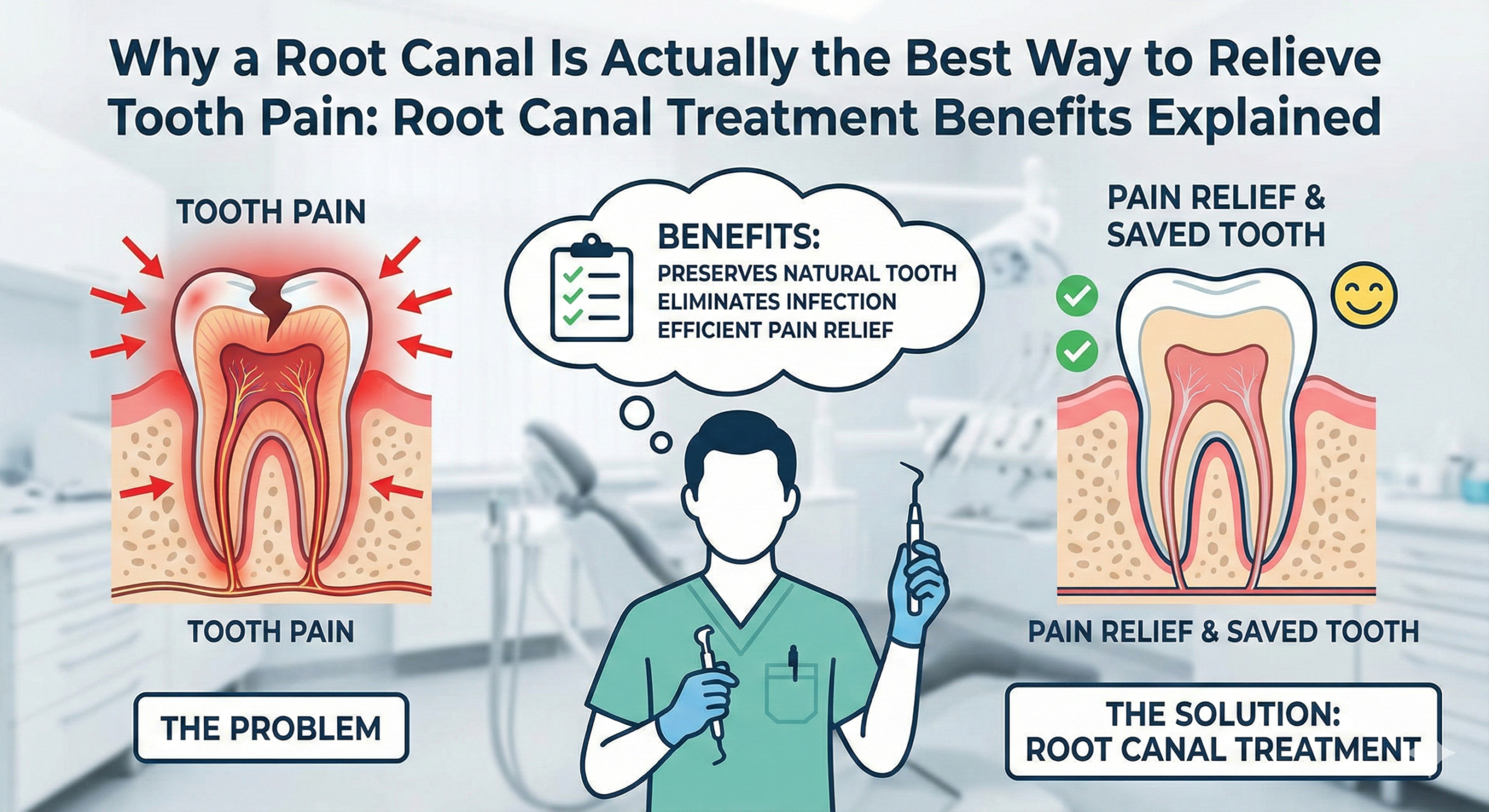
Inside every tooth is soft tissue called pulp, which contains nerves and blood vessels. When bacteria infect this pulp, pressure builds inside the tooth causing intense pain, swelling, and sensitivity.
Key takeaway:
A root canal removes infected pulp, which is why pain decreases not increases.
What Is a Root Canal Treatment?
A root canal is a procedure designed to:
- Remove infected or inflamed pulp
- Clean and disinfect the inner tooth canals
- Seal the tooth to prevent reinfection
Step-by-Step Overview:
- Local anesthesia is applied (you won’t feel pain)
- The infected pulp is removed
- Canals are cleaned and shaped
- The tooth is sealed and restored
This process allows patients to save their natural tooth (secondary keyword use) instead of extracting it.
According to the American Dental Association (ADA), root canal treatments have a success rate of over 95%, making them one of the most reliable dental procedures.
Root Canal Treatment Benefits You Should Know
Let’s address the biggest reason patients search this topic: benefits.
1. Immediate Pain Relief
Once infection is removed, pressure on the nerve disappears. Many patients report feeling better the same day.
2. Saves Your Natural Tooth
One of the most important root canal treatment benefits is the ability to save your natural tooth rather than removing it.
3. Stops Infection From Spreading
Untreated infection can spread to:
- Jawbone
- Sinuses
- Other teeth
- Bloodstream
Root canal treatment prevents these serious complications.
4. Restores Normal Chewing
After restoration, the tooth functions just like a natural one.
5. Cost-Effective Long-Term Solution
Replacing an extracted tooth with implants or bridges is often more expensive than preserving it.
Does a Root Canal Hurt? Myth vs Reality
Myth: Root canals are extremely painful
Reality: Modern root canals feel similar to getting a filling.
Advancements in:
- Local anesthesia
- Digital imaging
- Rotary instruments
have transformed patient experience.
Fact:
A study published in the Journal of Endodontics found that over 90% of patients reported little to no pain during or after treatment.
This is why many dentists now say:
Living with an infected tooth hurts more than the root canal itself.
Root Canal vs Tooth Extraction: Which Is Better?
Many patients ask if it’s easier to “just pull the tooth.”
| Root Canal | Tooth Extraction |
|---|---|
| Saves natural tooth | Tooth is lost permanently |
| Maintains bite alignment | Teeth may shift |
| Normal chewing function | Requires replacement |
| Lower long-term cost | Higher replacement costs |
Dentists and endodontists agree that saving the natural tooth whenever possible is always the best option.

Why You Should Choose an Endodontist for Root Canal Treatment
While general dentists can perform root canals, an endodontist specializes exclusively in diagnosing and treating tooth pain and infection.
Endodontist Advantages:
- Advanced training in root canal therapy
- Specialized pain-management techniques
- Higher success rates
- Faster recovery
Choosing an experienced endodontist maximizes all root canal treatment benefits while minimizing discomfort.
Modern Technology That Makes Root Canals Comfortable
Today’s root canal treatments are nothing like the past.
Technologies Used:
- Digital X-rays (lower radiation)
- Electronic apex locators
- Rotary endodontic instruments
- Advanced irrigation systems
These tools allow endodontists to treat infections more efficiently, accurately, and comfortably.
When Do You Need a Root Canal? Warning Signs
If you experience any of the following symptoms, a root canal may be necessary:
- Persistent toothache
- Sensitivity to hot or cold
- Swelling around the gums
- Darkening of the tooth
- Pimple-like bump on gums
Delaying treatment allows infection to worsen and reduces your chances of saving the tooth.
Conclusion: Why Root Canal Treatment Benefits Outweigh the Fear
Root canals aren’t something to fear—they’re something to appreciate.
The pain you feel comes from infection, not the procedure. When performed by a skilled endodontist, the root canal treatment benefits include fast relief, infection control, and the ability to save your natural tooth.
If you’re experiencing tooth pain, waiting only makes things worse.
Schedule a consultation with our endodontist today and experience the true benefits of modern root canal treatment.
FAQs: Root Canal Treatment Benefits
1. What are the main root canal treatment benefits?
The main root canal treatment benefits include pain relief, infection removal, and saving your natural tooth.
2. Is root canal treatment better than extraction?
Yes. One of the biggest root canal treatment benefits is preserving the tooth and preventing costly replacements.
3. How long do root canal treatment benefits last?
With proper care, the benefits can last a lifetime.
4. Can an endodontist make root canal treatment painless?
Yes. An experienced endodontist uses advanced techniques to maximize root canal treatment benefits with minimal discomfort.
5. Does delaying treatment reduce root canal treatment benefits?
Absolutely. Delaying treatment can reduce success rates and increase the risk of extraction.
